5 Garden Tricks That Keep Your Plants Thriving With Less Water
Watering the garden can start to feel like a full-time job once the weather turns warm, especially if you are out there every evening with a hose trying to keep everything alive.
The truth is, most gardens do not need as much water as we give them. They need the right water at the right time, which is a very different thing.
These five tricks will keep your plants healthy while cutting down on how much you actually need to water.
1. Water Early in the Morning, Not in the Evening
Watering in the heat of the afternoon means a lot of that water evaporates before it ever reaches the roots. Evening watering seems smarter, but it can leave leaves damp overnight, which makes plants more prone to mold and fungal problems.
Early morning, before the sun gets strong, gives water time to soak into the soil while the air is still cool. Plants get what they need, and any moisture left on the leaves dries off quickly once the sun comes up.
Tip: Aim the hose or can at the base of the plant, not the leaves, so the water goes straight to the roots.
2. Spread Mulch Around the Base of Every Plant
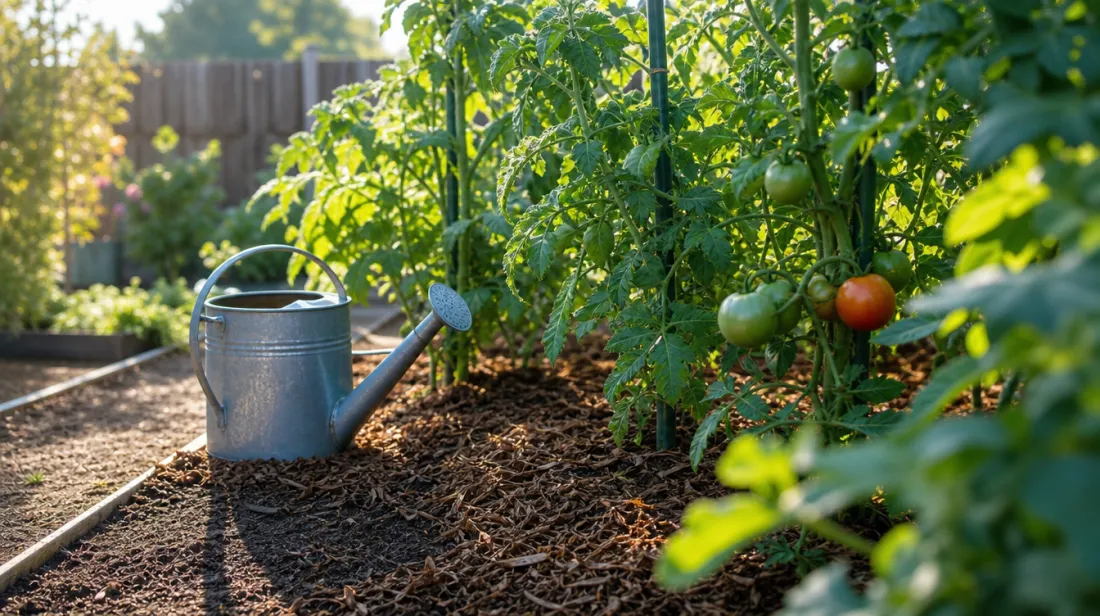
Bare soil dries out fast, especially in direct sun, which means you end up watering more often just to keep up. A two to three inch layer of mulch, whether it is wood chips, straw, or shredded leaves, acts like a lid that holds moisture in the soil.
Mulch also blocks sunlight from reaching weed seeds, so you get fewer weeds competing with your plants for that water in the first place.
3. Water Deeply, But Less Often
A quick daily sprinkle only wets the top layer of soil, which encourages roots to stay shallow and close to the surface where they dry out fast. Watering deeply a couple of times a week, so the moisture reaches several inches down, trains roots to grow deeper where the soil stays cool and damp longer.
Deeper roots also make plants more resistant to a hot, dry stretch of weather, since they can reach water that shallow roots cannot.
Tip: Stick a finger two inches into the soil before watering. If it still feels damp, you can usually wait another day.
4. Group Plants With Similar Water Needs Together
It is common to plant a thirsty vegetable right next to a drought-tolerant herb, which means one of them is always getting too much or too little water. Grouping plants by how much water they need lets you water each section only as much as it actually requires.
This also makes it easier to notice when one section is struggling, since you are not trying to judge a mixed bed all at once.
5. Make a Simple Bottle Drip Waterer
For pots or individual plants that dry out fast, a plastic bottle with a few small holes poked near the cap, buried cap-down next to the plant and filled with water, releases moisture slowly into the soil over a day or two. This is especially useful for plants in full sun or in smaller containers that dry out faster than garden beds.
It is a low-cost way to keep a thirsty plant watered evenly without checking on it constantly.
Tip: Start with just a few small holes. You can always poke more if the water drains too slowly.
Check the Soil Before You Water, Not the Calendar
A lot of overwatering happens because people water on a fixed schedule, like every other day, whether the plant needs it or not. Soil holds moisture differently depending on the weather, the type of plant, and even the time of year, so a rigid schedule often misses the mark.
Get in the habit of checking the soil first, using the finger test from the deep watering tip above, and let that guide your decision instead of the calendar. This alone can cut back on wasted watering trips significantly over a growing season.
Collect Rainwater When You Can
If you get regular rain where you live, a simple rain barrel under a downspout can collect a surprising amount of free water over a season. That water can then be used for the driest stretches, cutting down on how much you need to run from the hose or tap.
Tip: Keep the barrel covered with a screen or lid to stop it from becoming a breeding spot for mosquitoes.
The Bottom Line
Keeping a garden alive is less about how much water you use and more about using it wisely. Water early, water deep, check the soil instead of the calendar, and give it a little help holding onto what it gets.
Try a couple of these changes this week and you will likely notice your plants looking healthier while your water bill looks a little better too.